

Blogs
Difference Between Mobility And Flexibility: What You Need To Know

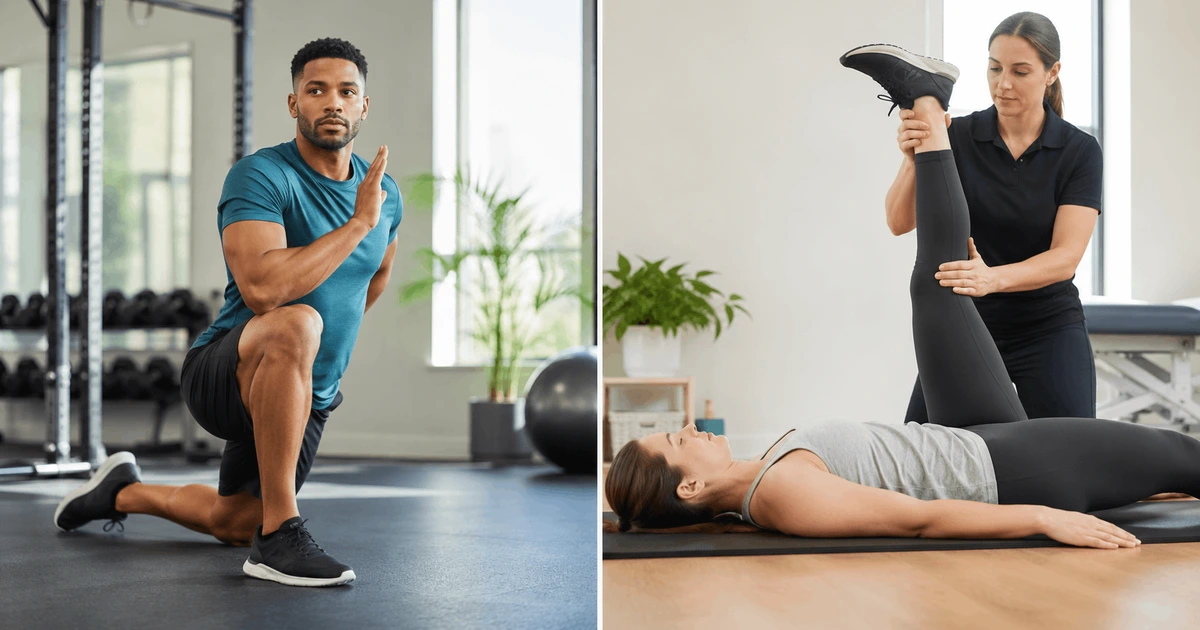
You have probably used the words mobility and flexibility to mean the same thing. Most people do. You reach for something on a high shelf and say your mobility is not what it used to be. Or you skip a yoga class and say you need to work on your flexibility. But these two qualities are not interchangeable, and understanding the difference changes how you train, how you recover, and how well your body moves.
Understanding how these two qualities differ is not just academic. It has real implications for how you exercise, how you manage pain, and how effectively you can prevent injuries.
What Is Flexibility?
Flexibility refers to the ability of a muscle or group of muscles to lengthen passively. It is how far a muscle can stretch when an external force, like gravity, a strap, or another person, applies the movement. The hamstring stretch you do while sitting and reaching for your toes is a measure of flexibility.
Genetics plays a role in how flexible you naturally are. Some people have longer, more extensible muscle fibers than others. Static stretching is the most common method for building flexibility, and it works best when done consistently over time.
What Is Mobility?
Here is where the difference between mobility and flexibility really becomes clear. Mobility is the ability to actively control movement through a full range of motion. It is not just about how far a joint can go, but how well you can move it there under your own control.
Think about a deep squat. You might be flexible enough to stretch your hips passively into that position. But if your core cannot stabilize your spine, your ankles cannot dorsiflex enough, and your hips lack the strength to control the descent, you do not have the mobility to squat properly, even if your muscles are flexible.
Why The Difference Between Mobility And Flexibility Matters
The practical reason the difference between mobility and flexibility matters is injury prevention and functional performance. People who are flexible but lack mobility often have unstable joints that move beyond their controlled range. People who are immobile but not flexible often compensate with poor movement patterns that lead to overuse injuries.
In physical therapy assessments, therapists evaluate both. They test flexibility by checking how far your limbs can be passively moved. They test mobility by observing how well you control movement patterns like squatting, reaching, and stepping.
How To Train Both Effectively
For flexibility: Static stretching, holding a stretch for 30 to 60 seconds, is effective. Regular yoga practice also builds passive muscle length over time.
For mobility: Dynamic warm-ups that take joints through their full range, mobility drills like hip circles and thoracic rotations, and resistance-based movements through full range are all effective. Physical therapy programs often emphasize mobility training because it directly translates to better real-world movement.
For both together: Movements like yoga and Pilates naturally combine passive flexibility with active control. Programs built around functional movement patterns address both qualities simultaneously.
Putting It Into Practice
Understanding the difference between mobility and flexibility means you can stop treating every movement limitation the same way. If you cannot reach your toes, you might need more flexibility. If you cannot squat to full depth with control, you likely need more mobility.
For a structured program that works on both within a complete recovery and pain management framework, NeuroPhysio RX delivers a personalized Physical Therapy experience designed around your specific movement needs.
Now that you know the difference between mobility and flexibility, train them both with intention. Download NeuroPhysio RX and follow a program designed by physical therapists to improve your movement quality and reduce pain.