

The Connection Between Posture and Pain

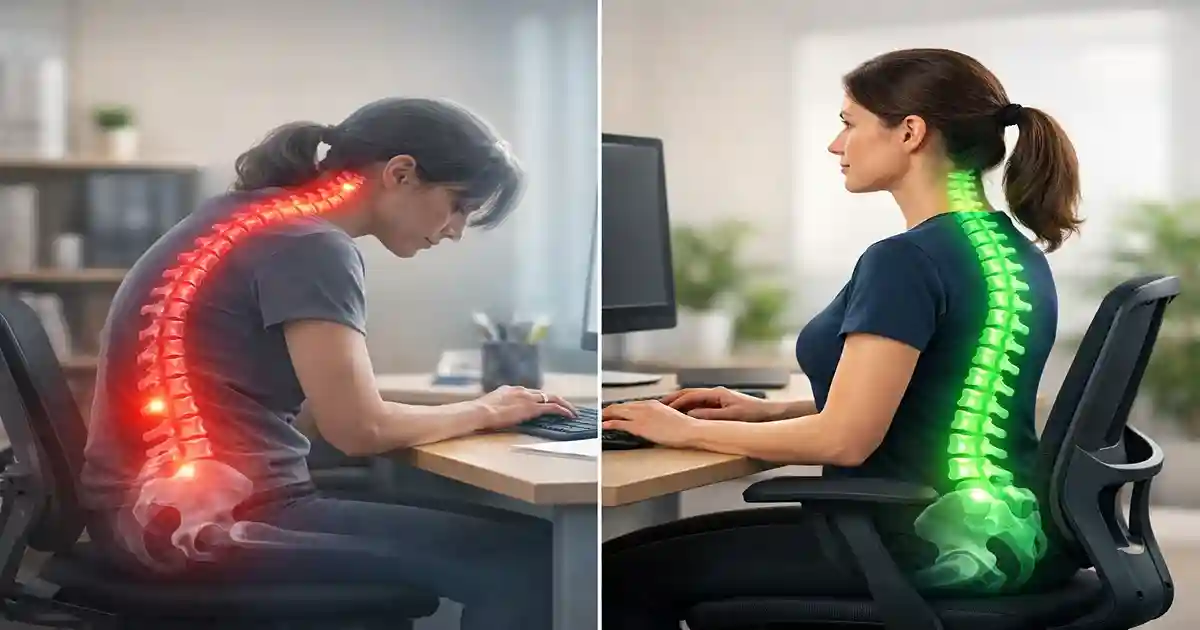
You may have heard that posture matters. But you might still wonder how much it really affects your pain.
The connection between posture and pain is not about sitting perfectly straight all day. It is about how your body distributes load over time. When certain muscles stay tight and others remain weak, strain builds. Over weeks or months, that strain can contribute to discomfort.
Let’s look at what actually happens inside your body.
How Posture Influences Muscle Balance
Your body is designed to move. When you stay in one position for long periods, certain muscles shorten while others weaken. For example, prolonged forward head posture can tighten neck muscles and strain upper back structures.
Over time, this imbalance can lead to more tension and discomfort, but understanding how posture relates to pain can really help. It’s useful to remember that pain often develops gradually from repeated stress, rather than from just one event.
Improving posture is not about rigidity. It is about restoring balance.
Load Distribution and Joint Stress
When your alignment shifts forward or slouches repeatedly, joints absorb uneven pressure. The spine, hips, and shoulders are especially sensitive to long-term loading patterns.
Research in musculoskeletal health shows that sustained poor positioning can contribute to increased strain on ligaments and muscles. While posture alone may not cause chronic pain, it often contributes to it.
This is why the connection between posture and pain becomes clearer when you examine daily habits rather than isolated moments.
Movement Is More Important Than Perfection
There is no single perfect posture that eliminates pain. What matters more is variation. Changing positions regularly reduces sustained stress on any one area.
Standing up, stretching, and doing mobility exercises regularly during the day help improve circulation and lessen stiffness. These simple actions break the cycle that gradually links poor posture to pain.
Think of posture as dynamic rather than fixed.
Strength and Stability Support Alignment
Posture improves when supportive muscles are strong. Core muscles, upper & lower back stabilizers, and hip muscles all contribute to balanced alignment.
When these areas are weak, your body may default to compensatory positions that increase strain. Strengthening exercises help correct those imbalances.
By combining strengthening with mobility work, you address the root causes behind the connection between posture and pain, rather than just trying to sit straighter.
Nervous System Sensitivity and Posture
Pain is influenced by more than mechanics. The nervous system plays a major role. If your body remains tense due to stress, muscles may tighten and reinforce poor positioning.
This tension increases sensitivity and discomfort. Relaxation techniques and mindful breathing can reduce that tension, helping break the cycle.
Understanding both muscular and neurological factors provides a clearer picture of how posture relates to pain.
Practical Steps You Can Take Today
Start by increasing awareness. Notice how long you stay in one position. Adjust your workspace so your screen is at eye level and your feet rest flat on the ground.
Incorporate simple mobility breaks throughout the day. Strengthen key muscle groups gradually. Small changes performed consistently create meaningful improvements over time. Also read about How Mobile Apps Are Transforming Physical Therapy.
Build Better Habits for Long-Term Comfort
The connection between posture and pain is influenced by daily repetition. Improving alignment does not require perfection. It requires awareness, movement, and consistency.
At NeuroPhysio RX, structured programs help you combine mobility, strengthening, and mindfulness to support better posture and reduced discomfort. Start today and take control of how your body feels tomorrow.