

Blogs
Knee Pain Physical Therapy Exercises: What Works And Why

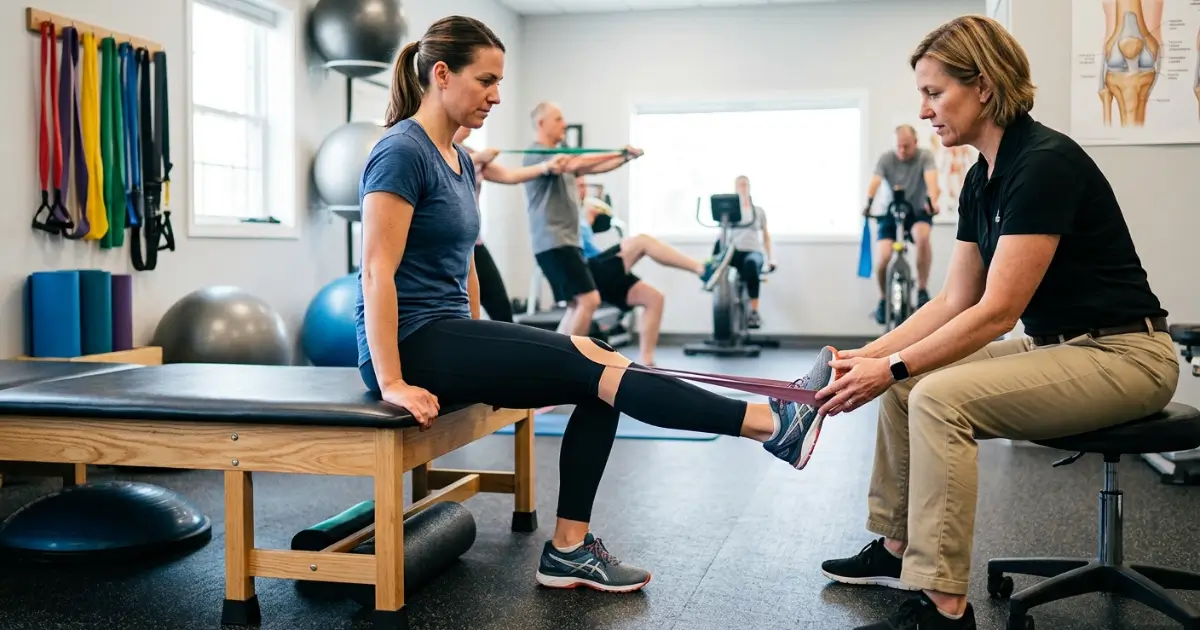
The knee is one of the most used and most injured joints in the body. Whether you are dealing with osteoarthritis, a meniscus issue, patellar tendinopathy, or post-surgical recovery, the path forward almost always runs through the same territory: structured, progressive knee pain physical therapy exercises designed to rebuild strength, restore range of motion, and reduce the joint loading that keeps pain cycles active.
The good news is that you do not need to be in a clinic to benefit from knee pain therapy exercises. When you understand the principles behind them and follow a properly sequenced program, you can make meaningful progress at home. This blog gives you a clear, clinical framework for knee rehabilitation that you can act on today.
Why Physical Therapy Is the First Line of Treatment for Knee Pain
Multiple systematic reviews and clinical guidelines from organizations including the American Academy of Orthopedic Surgeons confirm that exercise-based physical therapy is the most effective first-line treatment for knee osteoarthritis, patellofemoral pain syndrome, and most non-traumatic knee conditions. Knee pain therapy exercises work by strengthening the quadriceps and hamstrings that absorb load from the joint, improving knee tracking mechanics, and reducing the inflammatory burden through circulation-promoting movement.
Straight Leg Raises
Lie on your back with one leg bent and one straight. Tighten the quadriceps of the straight leg and lift it to the height of the bent knee. Hold for three seconds and lower slowly. This activates the quadriceps without flexing the knee joint, making it one of the safest early-stage knee pain physical therapy exercises for people with active swelling or significant joint irritation.
Terminal Knee Extension
Stand with a resistance band looped behind your knee. Step slightly forward to create tension, then straighten your knee against the band’s resistance. This exercise specifically targets the VMO, the inner quadriceps muscle that is frequently weak in people with patellar tracking problems and patellofemoral pain syndrome. It is one of the most commonly prescribed knee pain exercises for anterior knee pain.
Step-Ups
Using a stable step or low platform, step up with one foot and slowly lower back down. Keeping the knee tracking over the second toe throughout the movement trains the entire lower limb kinetic chain while loading the knee progressively. Step-ups are a functional knee pain exercise that bridges the gap between basic strengthening and real-world demands like climbing stairs.
Wall Sits
Stand with your back against a wall and slide down until your thighs are parallel to the floor or as far as comfortable without pain. Hold for 20 to 30 seconds. Wall sits build quadriceps endurance, which is particularly important for people whose knee pain exercises program targets daily activities like prolonged standing or walking.
Hamstring Curls
Lie on your stomach and bend one knee toward your glutes against gravity or light resistance. The hamstrings play a critical role in protecting the knee from anterior shear force, and strengthening them is a non-negotiable component of any complete knee pain exercises program.
Get a Personalized Knee Rehabilitation Program
Progressing these exercises safely, at the right pace for your specific knee condition, is where professional guidance makes all the difference. NeuroPhysio RX provides a personalized Physical Therapy program built around your specific knee pain, delivered through high-quality video guidance and supported by physiotherapist and occupational therapist access throughout your recovery. The app tracks your progress weekly and sends reminders to keep your knee pain physical therapy exercises on schedule.
Download NeuroPhysio RX today and follow knee pain physical therapy exercises built for your knees by clinical professionals.